
On this page
- Confirm the visit with the school first
- Decide what belongs in the folder
- Write a one-page athlete summary that stays factual
- Give film access without creating a new problem
- Put permissions and contact preferences in writing
- Hand the folder to the school coach, not the college coach
- Follow up without crowding the school
- Review the folder after the visit
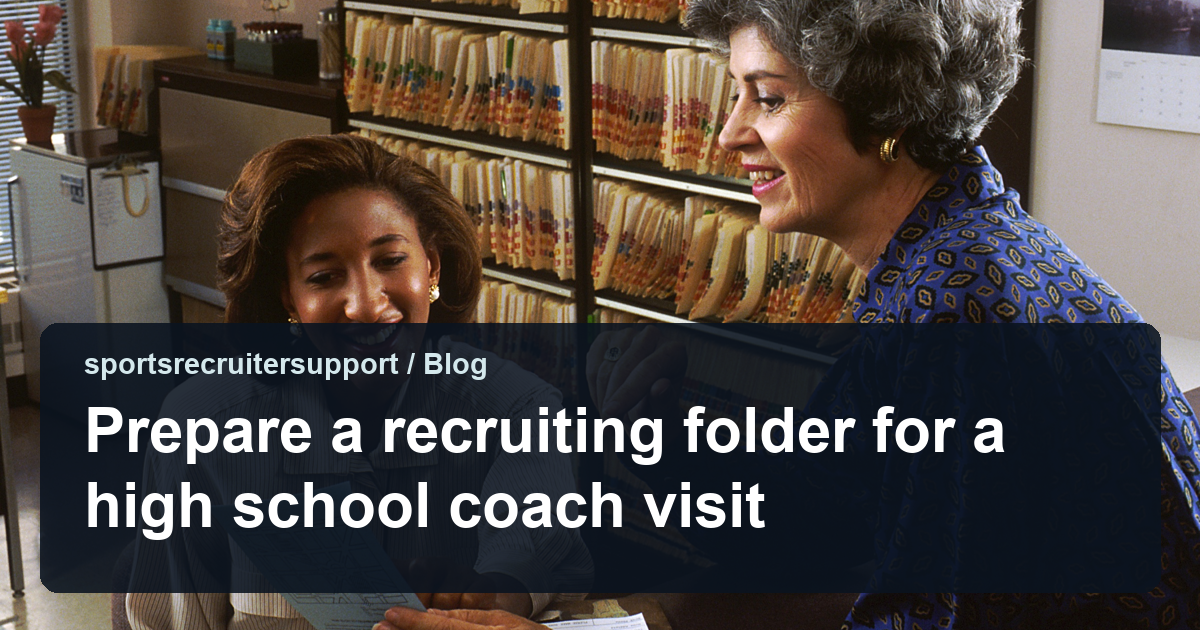
A college coach who visits a high school is usually trying to confirm three things quickly: whether the athlete is academically viable, whether the film matches the live evaluation, and whether the high school coach supports the recruit. The family can help that visit go well without taking control of it. A small recruiting folder, prepared with the high school coach, gives the college coach a clean set of facts and leaves the school in charge of the schedule. The folder also protects the family from sending documents the school has not approved.
Confirm the visit with the school first
The high school coach owns the visit, not the family. Ask the school coach whether a college coach has requested a meeting, who will attend, and what the family is allowed to provide. Some schools prefer to send the transcript and film themselves, while others ask the family to supply a one-page summary. The family should follow that preference even if it seems slower than sending everything directly.
Record the confirmed date, time, location, and names of the people attending. A visit that moves from the athletic office to the guidance office needs a clear meeting point and a backup phone number. Ask whether the college coach wants to see the athlete in person or only meet with the high school staff. That answer determines whether the athlete needs to leave class and who must approve the absence.
Decide what belongs in the folder
The folder should answer the college coach's first-round questions without duplicating the school's official records. A one-page athlete summary, a film link with access instructions, and a short list of academic questions are usually enough. Do not include a full transcript unless the school has approved that release. Do not include medical records, family financial documents, or anything the athlete would not want forwarded.
Keep the folder to four or five pages so it can be read during a short visit. The first page should carry the athlete's name, graduation year, position, school, club team, and the best contact for each adult. The second page can summarize the current season and the film. The remaining pages should hold the questions the family wants the high school coach to raise, clearly labeled as family questions rather than school statements.
Write a one-page athlete summary that stays factual
The summary should use the same facts that appear on the athlete's recruiting profile and school records. List the legal name, graduation year, position, height and weight if relevant, and the current team. Add the cumulative GPA and the most recent test score only if the school has verified them. A summary that conflicts with the transcript creates work for everyone and can make the family look careless.
Use short bullets for measurable facts and a short paragraph for context. The paragraph can explain a position change, a missed season, or a difficult course load, but it should not make excuses or promise outcomes. The goal is to give the college coach a reason to ask a better question. A summary that is honest about a gap is more useful than one that hides it and gets corrected later.
Give film access without creating a new problem
A college coach on a school visit may not have time to watch a full game, so the folder should point to a short evaluation clip and a full-game link. Write the clip title, length, jersey number, and the timestamp of the first relevant play on the page. If the platform requires a password, include it in the folder rather than sending it in a separate message that may be lost. Test the link on a phone before the visit.
Do not hand over a USB drive unless the school has approved it and the college coach has asked for one. A link is easier to forward, revoke, and replace. If the film includes other minors, confirm that the family has permission to share it and that the link does not expose unrelated athletes. The recruiting camp research brief is a useful place to record which clip was sent to which program.
Put permissions and contact preferences in writing
The folder should state who may be contacted, by which channel, and during which hours. A parent may prefer email, while the athlete may be allowed to return calls after practice. Write those preferences on the summary so the college coach does not have to guess. Include the high school coach's preferred contact method as well, because the school may want to be copied on the first follow-up.
Permission language should be simple and specific. Say that the family authorizes the school to share the attached summary and film link with the college coach for this visit, and name the date. Do not use a broad release that covers every program or every document. If the school has its own form, use that form and attach the family's summary as a separate page.
Hand the folder to the school coach, not the college coach
Give the folder to the high school coach before the visit and ask whether anything should be removed. The school coach may know that the college coach is only allowed to receive certain materials or that the visit will be shorter than expected. A brief handoff also lets the school coach ask the family a question before the meeting instead of during it. Respect the school's answer if it decides to use only part of the folder.
Keep a second copy at home with the date and the version of the summary. If the college coach asks for an update later, the family can send the same version plus a short note about what changed. A version label such as "summary updated after fall season" prevents confusion. The coach email recipient verification step is worth repeating before any follow-up email.
Follow up without crowding the school
After the visit, ask the high school coach for a short debrief: what the college coach asked, what was requested, and whether a next step was named. Send a thank-you note that repeats the next step rather than asking for a general evaluation. If the college coach requested film or a transcript, confirm who is sending it and when. Keep the family's follow-up separate from the school's internal process.
If the college coach does not reply, wait for the agreed window before sending another message. A visit is one data point, not a promise, and a rapid series of emails can make the family look disorganized. Record the visit date, the people present, and the follow-up date in the family's contact log. That record will be more useful than a memory of how friendly the meeting felt.
Review the folder after the visit
A folder is a small process, and it should improve after each use. Note which pages the school actually used, which questions the college coach answered, and which materials were requested again. Remove anything that was not used and add the one fact that would have made the conversation easier. The next visit then starts with a better folder instead of the same pile of paper.
The family should also review whether the visit produced a concrete next step. If the answer is no, the folder may have been fine but the program may not be ready to evaluate the athlete. That is useful information. A clean handoff, a dated record, and a realistic follow-up plan are the real deliverables of a high school coach visit.
Related Articles
Coach Communication
How to Verify a College Coach Email Recipient Before Sending
A practical, source-checked workflow to confirm the right staff member and official address before the athlete sends outreach, with tracking fields, review steps, and questions for athletes and families.
Camps and Showcases
What a Recruiting VA Should Put in a Camp Research Brief
A camp brief should help a family decide whether an event fits the athlete's goals and logistics without implying that attendance guarantees coach evaluation or recruiting interest.
Coach Communication
A Voicemail Plan for an Athlete Calling a College Coach
A prepared voicemail keeps an unexpected no-answer moment from turning into a rushed, unclear message.